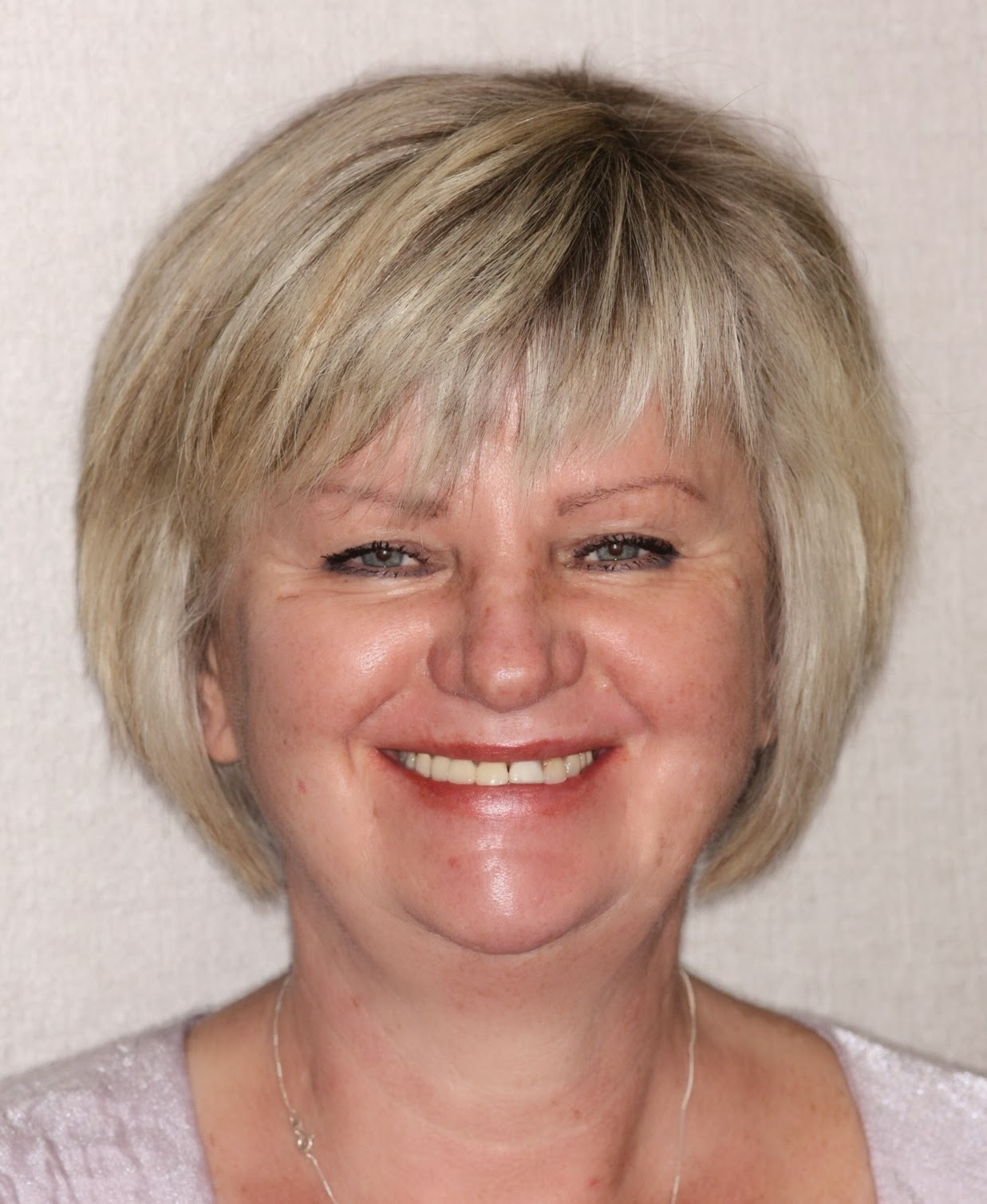
Barbara underwent several procedures to achieve her new smile. This included root canal therapy, surgical crown lengthening of upper anteriors and full crown and bridgework on upper teeth.
.JPG) |
| After |
 |
| Before |
What was her chief concern about her teeth?
Barbara's previous bridgework was failing. One of the teeth that supported her bridge were breaking down and needed adjunctive gum surgery to make them candidates for support for the new prosthesis. Her case presented some challenges as she had also lost some posterior support. She would require restoration of her bite to complete her treatment. Ideally implants would be the best option but she opted at this time for partial dentures until implants could be considered.
Why are implants the better option in many cases?
implants are now the treatment of choice in most cases when it comes to the replacement of lost teeth. Although they are biologically different from teeth, they act like teeth in many ways. Aesthetically they are usually the best way to mimic what nature originally gave us. They can stand alone as individual teeth, something a bridge or partial denture can't. Implants do not affect the adjacent teeth, unlike other alternatives that rely on adjacent teeth for fixation or support. However, implants do come at a higher cost but that is only in the short term. Over the long haul, properly integrated and maintained implants can be a bargain when you consider the costs associated with maintaining and replacing the other alternatives.
Before
.JPG)
After
.jpg)
What further treatment will Barbara need as she moves forward?
Post treatment care is always the key to a successful restoration. maintenance at home as well as frequent visits to the dentist for examination and cleaning of the restoration and all of her teeth will help ensure many years of smiles. in addition, the sooner implants are placed in the posterior dentition the better. for it's the posterior teeth that protect the anterior teeth and the smile.
Treatment was possible through a team effort!


Coordinator
To view other dental makeover click on the following:
Laurie's Dental Makeover
Carol's Dental Makeover
Martine's Dental Makeover
To learn more about implant click the following:
Dental Implants
Treatment was possible through a team effort!
Dentist
Endodontist Periodontist
Jonathan Mursic Connie
5 Axis Lab Treatment Coordinator
To view other dental makeover click on the following:
Laurie's Dental Makeover
Carol's Dental Makeover
Martine's Dental Makeover
To learn more about implant click the following:
Dental Implants


.JPG)
.JPG)
.JPG)
.JPG)
.JPG)
.JPG)
